.svg)

What Is Robotic Process Automation (RPA)?




RPA in one sentence
Robotic Process Automation (RPA) is software that can mimic the steps a person performs on a computer—clicking, copying, validating, logging in, downloading, uploading, and updating systems—to complete repeatable business processes.
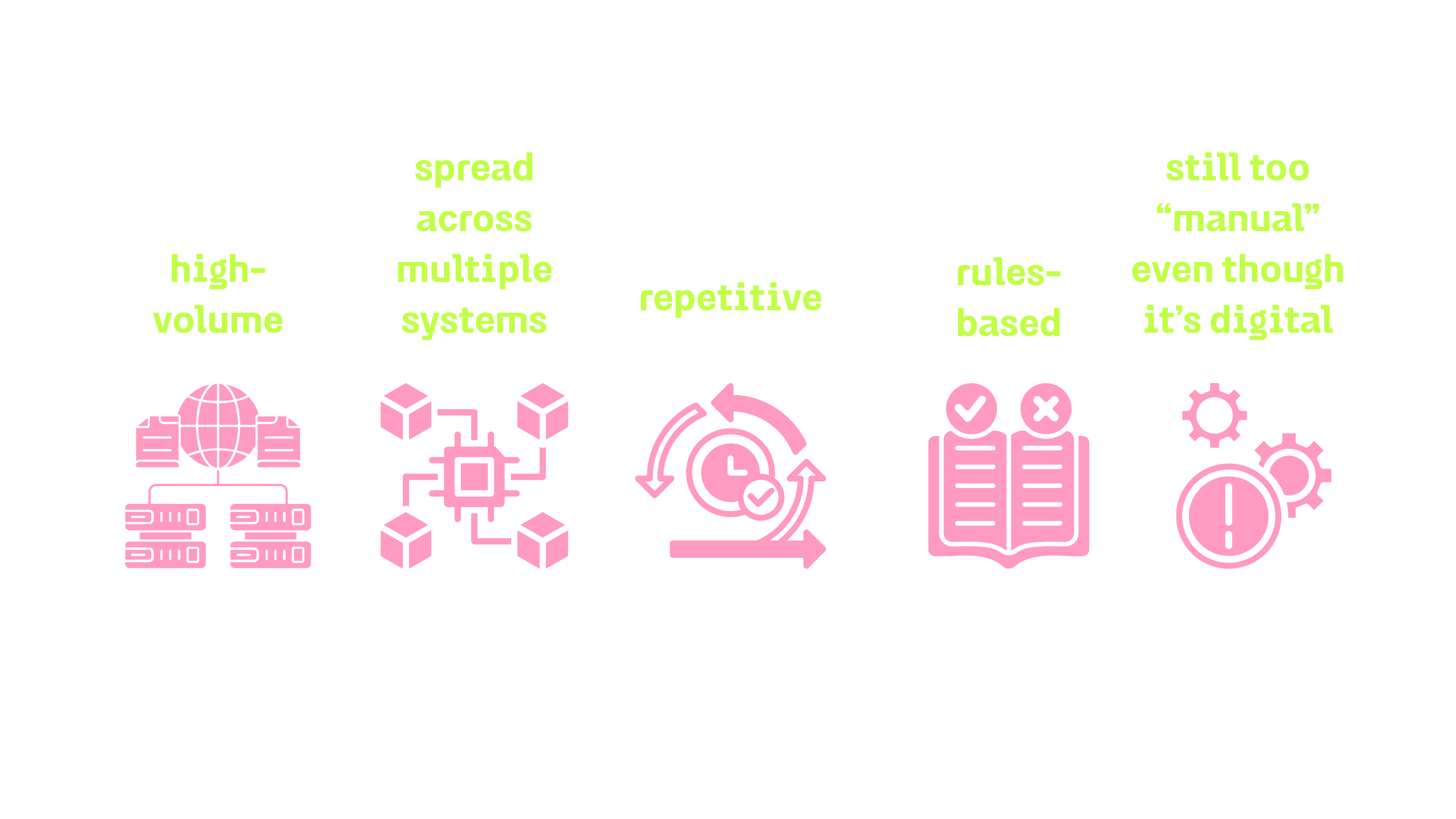
It’s most valuable when your work is:
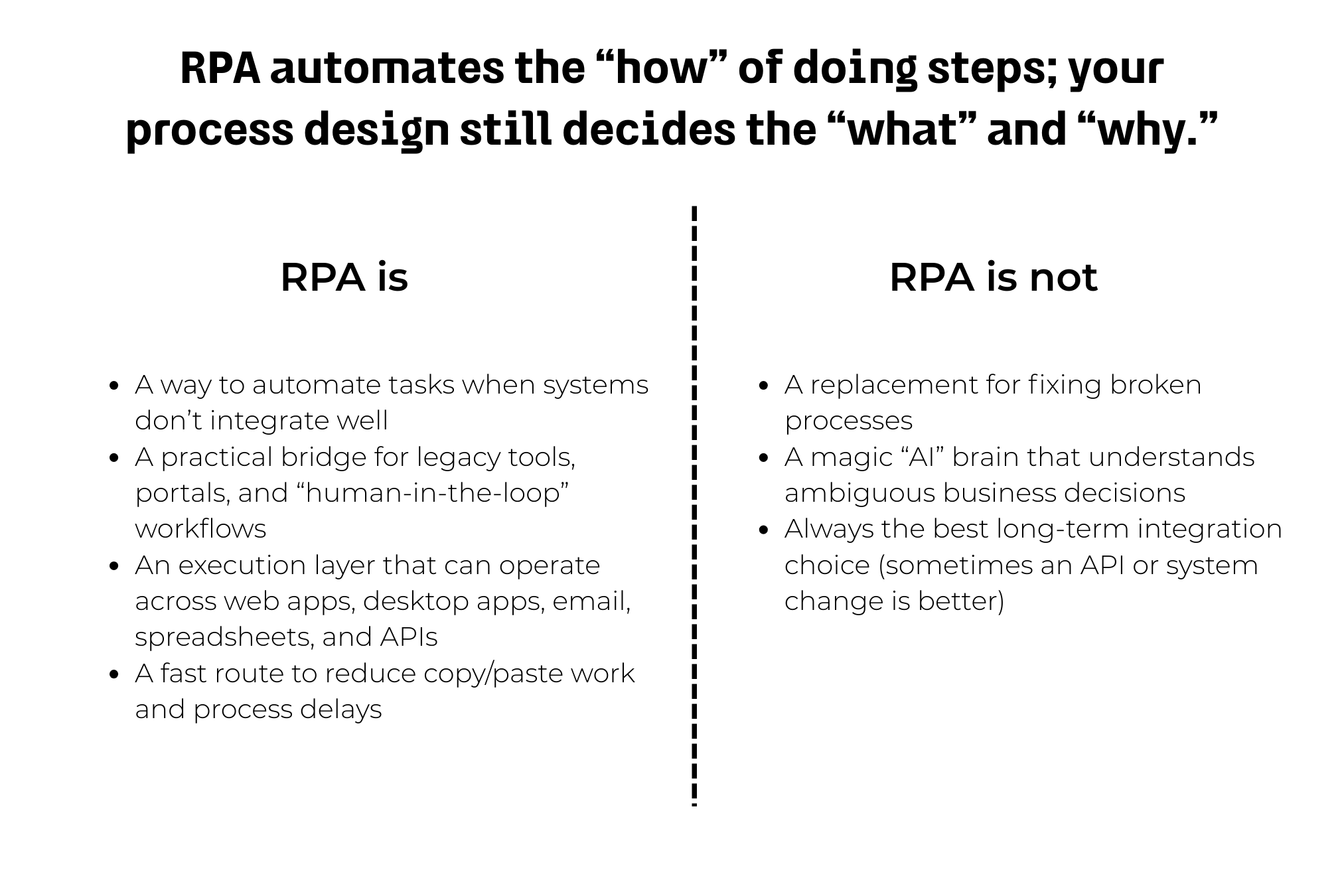
What RPA is (and isn’t)

Where RPA fits in the automation landscape
A lot of automation confusion comes from mixing up tools. Here’s a simple comparison:
RPA vs APIs
- APIs are best when systems support them and the integration is stable.
- RPA is best when there’s no API, the API is limited, or the workflow requires human-style navigation (portals, desktop apps).
RPA vs iPaaS (integration platforms)
- iPaaS works well for system-to-system data movement when both systems have connectors.
- RPA is useful for “the messy middle”: portals, legacy apps, and workflows involving documents, approvals, and exception handling.
RPA vs BPM (Business Process Management)
- BPM designs and orchestrates processes.
- RPA executes steps inside systems.
They often work together: BPM for orchestration + RPA for execution.
RPA vs AI
- AI helps with unstructured content (emails, documents, chat) and judgment-like tasks.
- RPA is best for deterministic actions.
Modern “intelligent automation” often combines both: AI extracts/understands → RPA completes actions.
Common RPA use cases
RPA shows up in almost every sector because the patterns are universal.
.png)
Conclusion
Robotic Process Automation is no longer just for large enterprises with deep pockets and long transformation timelines. Today, RPA has become a practical, accessible tool for businesses of all sizes looking to reduce manual work, improve accuracy, and scale operations without adding headcount.
The key to successful automation isn’t starting big — it’s starting smart. By identifying high-volume, repeatable processes and automating them incrementally, organisations can achieve measurable ROI quickly while building confidence in automation across teams. As digital complexity increases, businesses that embed automation into everyday operations will be better positioned to adapt, compete, and grow.
RPA is not about replacing people; it’s about freeing teams to focus on higher-value work, better decisions, and better customer outcomes. Whether you’re early in your automation journey or looking to formalise and scale existing efforts, the opportunity to create meaningful operational impact has never been greater.
Ready to explore where automation can create the biggest impact in your business?
👉 Get in touch to discuss how automation can work for your business today.